Blog / Hyundai Kona for Sale Near Grayslake

Out With the Old, in With the New: The 2026 Hyundai Kona vs Honda HR-V

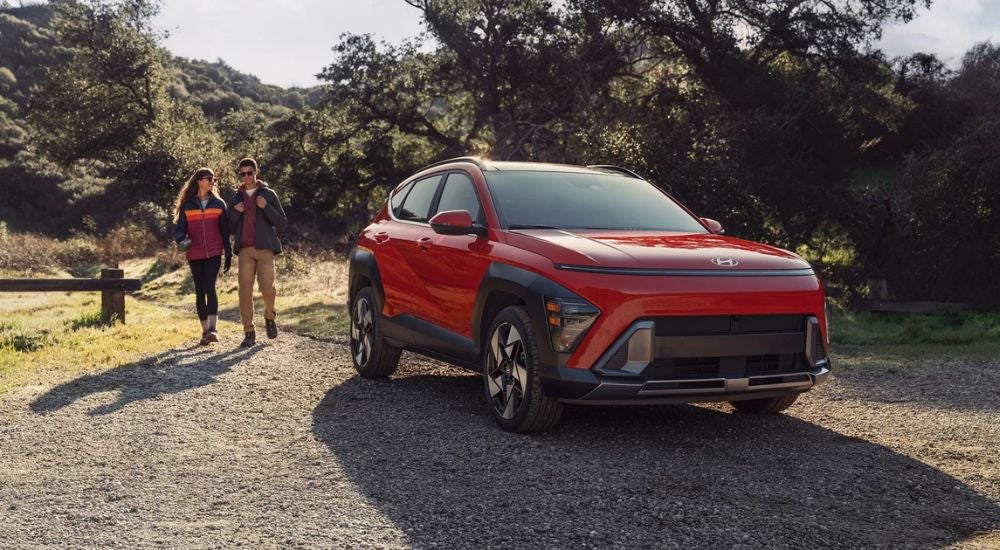
Red 2026 Hyundai Kona parked near a trail with a couple walking toward it.

Your time behind the wheel is what you make of it. If you're looking for a nondescript ride that'll get you from home to work and back again, there are plenty of serviceable crossover models designed to accomplish just that. They might not provide much in the way of thrills, and you might have a tough time picking your vehicle out of a crowded parking lot, but they'll get the job done. However, if you're looking for a bolder take on the crossover formula, and one that's sure to turn some heads as you go about your daily routine, it's time to find a Hyundai Kona for sale near Grayslake. The SUV might be classified as a subcompact, but it's big on style and not afraid to take some chances.

Boasting one of the most powerful engines in its class, and dressed to impress with a bold exterior and feature-rich cabin, the Kona proves that some brands still have their finger on the pulse, while others are content to create an underwhelming slate of copycat crossovers. Let's see how the 2026 Kona compares to Honda's own subcompact, the HR-V, as we explore the SUV that’s turning the segment on its head.

Never Short on Style 

The Kona's most obvious selling point is probably the SUV's eye-catching style. There's been a subtle shift in the world of automotive aesthetics in recent years as a wave of all-electric models pushes the industry in a bold new direction. The Kona retains the traditional gas-powered engine but draws plenty of inspiration from its EV competitors, with a cutting-edge design that's decidedly futuristic. 

Just take the crossover's signature LED light bar, which Hyundai has dubbed the Seamless Horizon Lamp. While these types of full-width light bars are usually reserved for newer EV models, Hyundai sets the Kona apart from much of the crossover pack with this modern upgrade. The SUV sports a similar light bar at the rear and also adopts a more minimal approach to the front grille, with a smooth, sculpted look that'll be familiar to any fans of Hyundai's IONIQ EV crossovers.  

From the sharp creases that flow across the SUV's sides to its sculpted fenders, geometric design, and the floating roof effect made possible by the Kona's available black pillars, Hyundai's subcompact is never short on style. Throw in a sophisticated ambient lighting system that'll automatically adjust based on the current drive mode, plenty of soft-touch padded surfaces, H-Tex synthetic leather, and other premium materials, and it's easy to see how the Kona has become such a trendsetter in the subcompact segment. 

The HR-V represents a very different take on the crossover approach, at least from a design perspective. Honda has played it safe with its subcompact model, which, while not an eyesore, lacks much of the Kona's cutting-edge appeal. It'll come as little surprise to learn that the HR-V borrows heavily from the Civic sedan, especially when you get a look at the interior. The SUV's dashboard is almost identical to the Civic's, with its honeycomb vent design. The HR-V feels a bit old-fashioned, relying on physical controls rather than digital interfaces. The HR-V's timeless aesthetic is sure to satisfy those looking for something familiar, but it could prove a bit underwhelming for young drivers seeking a ride that reflects their contemporary style. The Kona offers an impressively modern alternative that's designed to help buyers in Grayslake stand out against the sea of crossover models.

Small in Size, Big on Space

It's hard to overstate the importance of flexibility when comparing crossover models. One day, you might be in the market for a spacious option that can comfortably accommodate five adults. The next could see you desperate for cargo capacity as you prepare for a longer road trip or off-the-grid adventure. The Hyundai Kona offers the sort of flexibility few subcompact models can match, and places right towards the top of the segment in terms of both cargo and passenger space. With 63.7 cu.ft. of maximum cargo space, the 2026 Kona earns a top-three finish in the subcompact segment. The Honda HR-V struggles to keep pace and could prove frustrating for those who rely on their SUV's cargo-hauling potential, with just 55.1 cu.ft. of cargo space.   

The Kona's generous dimensions are sure to prove useful on moving day or when you're trying to lug a bulky new purchase back home, but it can also offer plenty of storage when all five seats are occupied. The rear cargo area measures 25.5 cu.ft., giving the Hyundai a one cu.ft. advantage over its Honda rival. It might not be a huge gap, but it could mean the difference between packing your go-to adventure gear and having to make some tough pre-travel decisions. The Kona also edges out the HR-V in terms of passenger space, with 126.7 cu.ft. of total volume to the Honda's 123.1 cu.ft. Again, it's not a massive difference, but it can have a noticeable impact when you're trying to comfortably seat adult passengers. 

Subcompact models aren't generally renowned for their spaciousness, and often require full-grown riders to perform some circus-level contortions to fit in the back seat. The Kona trends towards the larger end of the segment and easily bests the HR-V in front-row head, shoulder, and hip room. The difference between the two models is even more noticeable when you slide into the second row, with the Kona offering both more headroom and legroom.
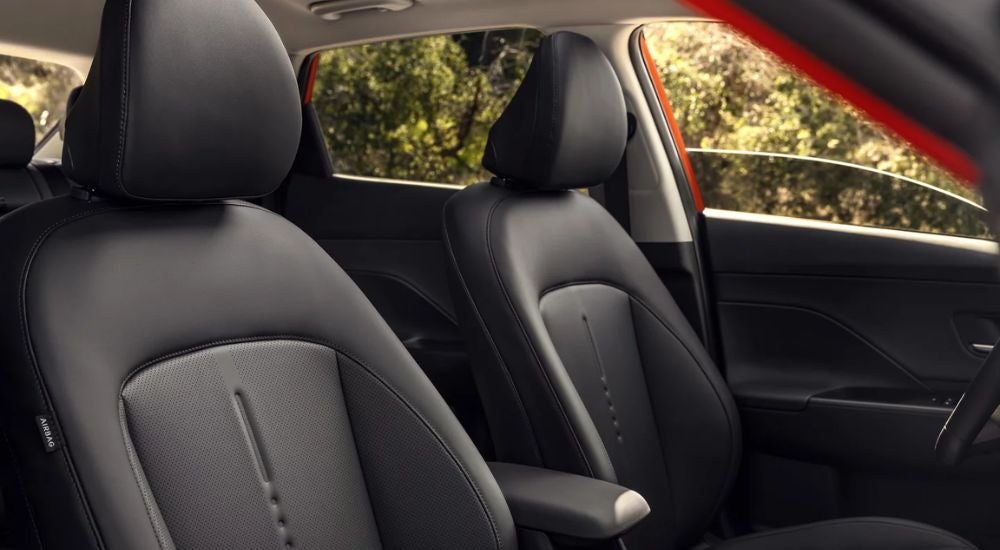
Black front seats on a 2026 Hyundai Kona.

Prioritizing Power 

Hyundai and Honda made two very different decisions when it comes to performance. The HR-V is more in line with what Grayslake drivers have come to expect from a subcompact crossover, which is to say, not much. The SUV's lone engine is a 2.0L I-4, limited to a paltry 158 hp due to the lack of a turbocharger. To be fair, that's not too far off the segment average, with most entry-level engines providing around 150 hp, but it can also make the HR-V a bit underwhelming when you're behind the wheel. The SUV's 9.4-second zero-to-60-mph time is a bit glacial, and could lead to some real frustration when trying to overtake another vehicle on the highway. 

The 2026 Kona kicks things off with its own naturally aspirated 2.0L I-4. Although it's slightly less powerful than the base HR-V at 147 hp, it still manages to shave a good 0.2 seconds off the Honda's sprint time. More importantly, it's significantly more efficient with the base engine achieving an EPA-estimated 31 MPG combined. The HR-V is relatively thirsty at 28 MPG combined, which would be excusable if it weren't also slower. 

That said, the Kona's real advantage lies in its optional 1.6L turbocharged engine. Tiny as it may be, the I-4 engine is a bona fide powerhouse with the ability to churn out as much as 190 hp. That's enough power to accelerate from 0 to 60 mph in 7.5 seconds, which should instill plenty of confidence when it's time to put the pedal to the metal. 

The Kona's 1.6L mill isn't quite as efficient as the base engine at 28 MPG combined, but this is a bit of a good news/bad news situation. Sure, the souped-up SUV might cost you a little more at the pump, but it's because the upgraded engine routes its power through a traditional eight-speed automatic instead of the continuously variable transmission (CVT) found on the base model. The automatic provides a more traditional driving experience and offers the sort of tactile feedback that can go a long way toward creating a stronger connection between driver and vehicle. Meanwhile, HR-V owners will be stuck with a CVT that, while efficient, can be a bit dull and create a pesky drone.

A Technological Achievement 

The Hyundai Kona and Honda HR-V may be pretty evenly matched in a few key areas, but the two subcompact SUVs offer a very different experience when it comes to standard infotainment and safety tech. This might not be a dealbreaker for every driver, but it's an important factor to consider if you're a tech-savvy driver who expects your vehicles to keep pace with your digitally dependent lifestyle. 

The Kona's floating dashboard serves as the crossover's cockpit, putting a 12.3-inch infotainment display within easy reach of both the driver and front seat passenger. The crossover comes standard with a 4.3-inch digital gauge display, but moving up to the top half of the trim ladder swaps it for a 12.3-inch display that perfectly complements the expansive infotainment system. Honda's subcompact struggles to compete, with a 9.0-inch infotainment display that's starting to look a little dated in the year 2026. The HR-V does offer a standard 7.0-inch digital gauge cluster across all trims, but lacks the upgrade potential of the Kona. 

Both models include wireless Apple CarPlay and Android Auto smartphone connectivity. While the base HR-V does boast a wireless charging pad, the Kona comes with more USB ports and a complimentary subscription to the brand's Bluelink+ connected services like remote start and lock/unlock, vehicle health reports, and maintenance alerts. The story is largely the same when it comes to standard safety tech. The Kona offers an impressive array of standard safety tech, including forward collision warning with automatic braking, lane centering system, lane keeping assistance, and adaptive cruise control.

Hyundai's SUV only improves as you ascend the trim ladder, with upper models offering everything from parking sensors and a blind-spot camera to a surround-view camera that gives drivers a unique bird's-eye view of their surroundings. The HR-V does offer a few interesting features, like a road sign assistance system that can read and display passing signage right on the dashboard display, but it's a classic case of too little, too late for the crossover model.
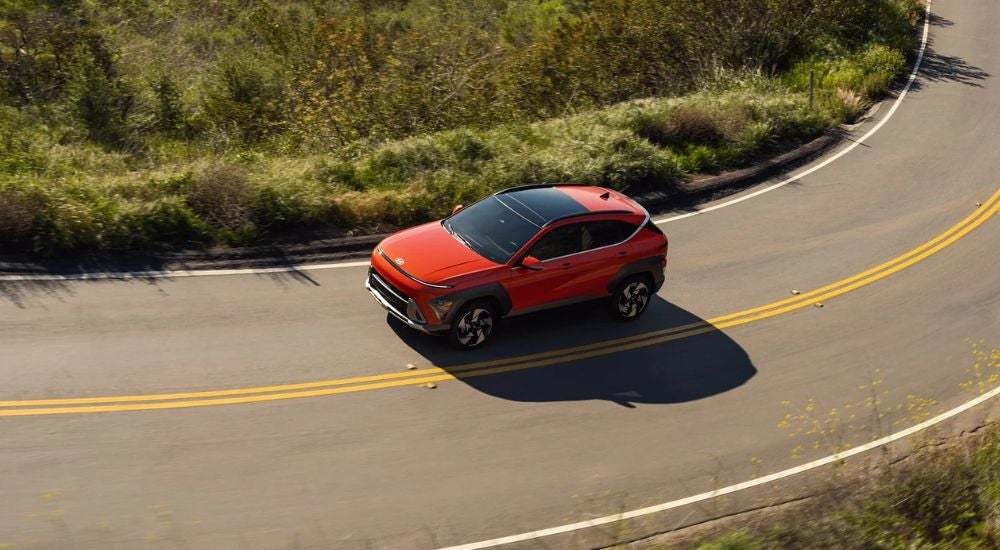
Red 2026 Hyundai Kona aerial view while driving on a paved road.

Make a Statement at Gurnee Hyundai

Affordability, fun, and utility are all on the table when you choose the 2026 Hyundai Kona. From the daily commute to weekend adventures and everything in between, the Kona can do it all. The crossover's available AWD system is perfect for exploring off-the-grid locales, and a full suite of modern tech features will provide plenty of entertainment, support, and convenience when you hit the open road. 

The HR-V isn't a bad choice by any means, but it simply can't match the high bar set by Hyundai's subcompact SUV. Honda's one-size-fits-all approach probably makes the shopping experience a little easier, but the lack of customization potential could leave drivers feeling like they're piloting a cookie-cutter SUV around Grayslake when they spot the Kona in their rear-view mirror. With only three trims, one engine option, and an undersized infotainment display, the HR-V's nondescript design won't exactly get your blood pumping. When you need a daily drive that's fun, stylish, and easy to street through tight city streets and crowded parking lots, the conversation begins and ends with the Hyundai Kona.
Posted in:

Recommended Posts

A blue 2026 Hyundai Tucson driving on a highway.

Pick Your Powertrain With the 2026 Hyundai Tucson

Even in today's competitive market, few models can match the Hyundai Tucson's sheer versatility. The stylish, compact crossover checks all the boxes when it comes to the qualities drivers value most, offering the most cargo space in its class along with a long list of standard comfort, safety, and infotainment features. But the SUV has another trick up its sleeve, and it's led plenty of drivers to seek out their own Hyundai Tucson for sale near Elgin. The crossover is available with three different powertrains, allowing drivers to dial in the perfect ride with gas, hybrid, and PHEV options. more Each model occupies its own specific niche, with some prioritizing performance while others put a premium on efficiency and cargo space. This flexibility has seen the Tucson rise through the sales charts with Hyundai moving nearly 250,000 units in 2025 alone. Let's walk through each model and see which Tucson is right for you. Performance Hybrid technology has come a long way since the first production model rolled off of the assembly line back in the early 2000s. While initially focused on fuel economy, today's hybrid models have become just as powerful as their gas-powered ancestors and, in many cases, even more so. Many of the market's fastest models leverage hybrid tech, as well as the purpose-built racing machines you'll find rounding your favorite Formula 1 circuit. The Tucson is no exception, with two hybrid models allowing drivers to unlock a thrilling automotive experience. We'll start with the star of the show in the Tucson PHEV. The plug-in hybrid easily tops the power rankings with 268 hp, though it matches its hybrid sibling in the torque department at 271 lb-ft. That's a compelling figure for a compact model, and one that allows the PHEV to sprint from zero to 60 mph in as little as 7.1 seconds compared to 8.5 seconds for the non-hybrid. The Tucson Hybrid posts a very similar acceleration figure to the PHEV. It can easily best segment rivals like Toyota's RAV4 Hybrid to 60 mph in 7.3 seconds. The hybrid is rated for 231 hp which, while no match for the PHEV, is still almost a 25% power increase over the purely gas-powered version. Opting for internal-combustion sees the Tucson produce 187 hp and 178 lb-ft of torque. While this might not do much for the crossover's performance resume, it does make a difference when it comes time to tow. The gas-powered Tucson can pull as much as 2,750 lbs, while the hybrids are limited to 2,000 lb. Still, if you're in the market for an engaging, responsive ride that'll add a little excitement to your daily commute, the Tucson hybrid and PHEV make a pretty strong case for themselves. Efficiency With both traditional hybrid and PHEV powertrains on the table, it's easy to save a little money at the pump when you choose the 2026 Hyundai Tucson. Even the gas-powered model trends right around the segment average, with an EPA-estimated 28 MPG combined, but a little electrification goes a long way toward lowering your lifetime operating costs. Then there are the hybrids. One might think that the PHEV would have a clear advantage over the hybrid, but both actually trend pretty close to one another in terms of efficiency. How is an eco-conscious Elgin driver supposed to choose between the two models? It all comes down to how the SUV is going to be used. If your time behind the wheel tends to involve a lot of extended road trips and long commutes, the hybrid's flexibility is pretty tough to ignore. The crossover's 1.6L turbocharged I-4 achieves a nice, even 38 MPG in both city and highway conditions. Unlike today's all-electric models, it never requires an extended pit stop to top off the battery. Best of all, the hybrid comes standard with a six-speed automatic transmission and all-wheel drive, so you'll never need to worry about traction when you're behind the wheel. The Tucson PHEV trends a bit lower at 35 MPG, but that doesn't tell the whole story. By equipping the plug-in model with a larger, 13.8-kWh battery, Hyundai provides drivers with up to 32 miles of all-electric driving range. This makes the PHEV particularly well-suited to urban environments, and means that drivers could theoretically bypass the gas pump altogether with a little advanced planning. The PHEV can be fully recharged in two hours using a Level 2 charging station. It also offers an impressive range when you tap both the battery and gas tank, with a tested range of around 380 miles. If efficiency is at the top of your must-have features list for a new SUV, the Tucson hybrid and PHEV are worth a closer look. Space The Tucson leads the segment in maximum cargo space, defying its compact designation to provide drivers with a roomy ride that offers plenty of space for passengers and storage. That said, the Tucson's three iterations aren't exactly created equal. The gas model and the standard hybrid offer the most spacious options, while the PHEV sacrifices a little space to accommodate its larger 13.8-kWh battery. While the first two models deliver more than 80 cu.ft. of cargo room, the PHEV measures in at around 71.8 cu.ft. The story is largely the same when both rows are in use, with the gas and hybrid offering 41.2 cu.ft to the PHEV's 31.9 cu.ft. Second-row passengers will enjoy more legroom with either of the first two options, but the PHEV's back seat could feel a little cozy for adults on extended road trips outside Elgin. Sheer space isn't the only difference between the Tucson models. The hybrid and PHEV versions have higher starting prices than their gas-powered counterparts. While some of the cost can be tied to battery costs and the relative complexity of the hybrid approach, the electrically-assisted Tucsons are simply better equipped. The standard AWD setup is certainly nice, but the Tucson Hybrid and PHEV are also both packed with a generous array of standard comfort, convenience, and safety tech that you won't find on the entry-level gas trim. These features include heated side mirrors, a 12.3-inch digital instrument panel display, steering wheel-mounted paddle shifters, and a hands-free power liftgate. Tucson by Way of Gurnee Hyundai There's no wrong answer when picking between the Tucson's three available powertrains. A wide range of engines lets the SUV serve a broad range of Elgin drivers, so buyers can prioritize performance, price, and efficiency as they see fit. That said, the standard hybrid probably represents the most versatile model, and might just be the best value of the bunch. It might not offer the PHEV's all-electric driving range, and can't tow as much as the gas-powered version, but its well-rounded design and competitive price make the hybrid pretty tough to pass up. You also won't need to worry about charging times or range-related issues as the temperature starts to drop. If you're still having a tough time picking your perfect Tucson, Gurnee Hyundai is here to help. We're ready to answer any questions you might have, share our personal experience, and do everything in our power to ensure you drive off the lot in a new SUV that keeps putting a smile on your face for years to come.

A blue 2026 Hyundai Tucson parked in a city.

Exploring the Safety and Driving Assistance Features on the 2026 Hyundai Tucson

The 2026 Hyundai Tucson is a compact SUV that offers many of the features commuters look for in their next vehicle. The Tucson offers drivers many practical advantages, including seating for five and ample cargo space. The tech-savvy aspects, such as an intuitive infotainment system, make the 2026 Hyundai Tucson for sale near Elgin an ideal choice for any commuter. more However, our focus today is on the most important aspect of any vehicle: its ability to keep you safe and protected on the road. The Tucson comes with many standard safety features that provide protection and oversight, not to mention peace of mind on the road at all times. Why Safety Is a Core Strength of the 2026 Hyundai Tucson NHTSA Ranking: Proven Peace of Mind Before we dive into the 2026 Hyundai Tucson's features, we wanted to start by examining its crash-test results. Each year, the NHTSA conducts collision testing on every new vehicle model that reaches the road. This testing is government-mandated, and the results are made public to all consumers. It's no surprise that the 2026 Hyundai Tucson received a five-star rating from the NHTSA, the highest score available. Peace of mind is priceless. Elgin drivers can rest assured that regardless of what might happen on their travels, they'll be well-protected. Standard Safety Features Built Into Every Tucson Protection and oversight in the Hyundai Tucson are ensured by its safety features and driving assistance systems. Safety features are standard components of the vehicle's design that help drivers maintain control and awareness in a variety of conditions. Driving assistance features are advanced technologies that enhance visibility, reaction time, and other important factors involved in safe driving. First, we're going to break down some of the standard safety features that make the 2026 Hyundai Tiscon a great buy for Elgin commuters. Airbags: Airbags are what help protect drivers and passengers in the event of a collision. The Tucson comes with eight in total. Downhill Brake Control: Many SUV owners use their vehicles for everyday driving on roads with varying conditions. If you're driving in Elgin on steep roads or declines, Downhill Brake Control helps maintain a steady, controlled speed by automatically applying braking pressure when needed. Electronic Stability Control with Traction Control System and Brake Assist: Maintaining control of any vehicle is crucial. These three features work in unison to help you maintain it. Electronic Stability Control can reduce the risk of an accident by monitoring steering control. Tucson's Traction Control System prevents wheels from losing traction on slippery roads. The Brake Assist detects emergency braking situations and automatically increases braking to reduce the stopping distance more quickly. Vehicle Stability Management: Wet road conditions can hinder your vehicle's braking system. Vehicle Stability Management helps prevent loss of control when the brakes are engaged. Tire Pressure Monitor System: Your tires are a fundamental part of Tucson's performance. The Tire Pressure Monitor System alerts you when pressure is too low, and a refill is needed. Rear Occupant Alert: Detects the rear seat area, ensuring that no one is left behind after you park your vehicle. These safety systems work together to provide added confidence behind the wheel, helping Tucson drivers stay aware, maintain control, and drive more safely in everyday conditions. Hyundai SmartSense Driver Assistance Technology Hyundai has always been on the cutting edge of innovation. The brand's driving assistance technologies are no exception. These features, part of the Smart Sense suite, offer Elgin drivers the protection and oversight that all commuters seek, along with peace of mind. Standard Driver Assistance Features on All Trims The following features are standard on all 2026 Hyundai Tucson trims. Regardless of what trim you choose, you'll have a safe commute wherever you go. Forward-Collision Avoidance Assist with Pedestrian, Cyclist, and Junction Turning Detection: Reaction time is what separates a collision from occurring and your ability to avoid one. Alerts are issued when vehicles, cyclists, and pedestrians are in proximity, either in front of you or when you're turning. The Tucson's braking system is automatically engaged if you don't react in time. Blind Spot Collision Avoidance Assist: Your blind spot area invites the likelihood of an accident. The technology operates using sonar to detect vehicles and other pedestrians in your blind spot. Driver Attention Warning: Driver fatigue causes several accidents each year. By monitoring steering patterns and issuing alerts, drivers are given notice when it might be time to pull over and rest. Lane Keeping Assist: Maintaining a proper lane position is a crucial part of safe driving. Lane Keeping Assist monitors your position and provides alerts and corrective steering to help you return to your lane. Lane Following Assist: By detecting lane markings and the vehicles ahead of you, your vehicle stays properly centered in its lane, preventing any unintentional drifting. Rear Cross-Traffic Collision Avoidance Assist: Backing out of a parking garage or in a residential area requires oversight of cross-traffic. By monitoring cross-traffic, you can avoid a potential collision. Smart Cruise Control with Stop-and-Go: Hyundai's version of ACC (Adaptive Cruise Control) monitors traffic patterns and helps drivers preserve reaction time. Safe Exit Warning: Safety is always important, even when you're exiting a vehicle. By utilizing sonar, approaching cyclists and other vehicles are detected, ensuring you leave your vehicle safely. Available Advanced Safety Features on Higher Trims For Elgin drivers who prioritize the highest level of safety, select trims have more advanced driving assistance technologies that take protection and oversight even further. Forward Attention Warning: Maintaining focus and attention are cornerstones of safe driving. A camera system installed in the Tucson's cabin issues an alert when a driver becomes distracted. Blind-Spot View Monitor: Advanced camera systems help you monitor your blind spot, making lane changes easier and safer. Highway Driving Assist 1: Automatically adjusts vehicle speed during highway travel in accordance with traffic patterns. Like ACC, it helps drivers maintain reaction time. Smart Cruise Control 2: Maintains a set vehicle speed like traditional cruise control. It also monitors driver alertness to present any dangerously drowsy driving. Navigation-Based Smart Cruise Control with Curve Control: An advanced version of Hyundai's ACC. It uses GPS to predict traffic conditions and can even adjust throttle response to help the vehicle slow down when taking curves. Advanced Rear Occupant Alert: Sensors monitor the rear seat area after the vehicle comes to a complete stop. Alerts are issued to notify the driver if someone is inadvertently left behind. Parking Collision Avoidance Assist Reverse: A feature that's recommended for families who live in highly populated residential areas. Sensors monitor the area behind you for other vehicles, cyclists, and pedestrians. Alerts are issued at the first sign of a potential collision. Parking Distance Warning: Detects objects all around the vehicle when you're either stopped or traveling at low speeds. Remote Smart Parking Assist: One of the Hyundai Tucson's most advanced features. This feature helps by controlling steering, braking, and light acceleration during parking and exiting a space. Surround View Monitor: Visibility and oversight of your surroundings are crucial when driving any vehicle. Advanced camera technology monitors your surroundings and displays them right on the vehicle's infotainment screen. A Safe Bet for Elgin: The 2026 Hyundai Tucson Many SUV owners are family-oriented drivers who prioritize safety, which makes the 2026 Hyundai Tucson a standout choice. Its suite of standard safety and driver-assistance features is designed to help drivers stay aware, in control, and confident on Elgin roads and beyond. If you want to experience the Hyundai Tucson firsthand, visit Gurnee Hyundai today for a test drive.

Copper 2026 Hyundai Santa Fe parked in a field

Which Three-Row Hyundai Is Right for Your Life? Here Are Some Questions to Ask Yourself

You’ve likely heard of the Hyundai Santa Fe and the Hyundai Palisade, but if you’re like many drivers, you might have a hard time deciding which one is right for you. Fear not; our experts are at your disposal to help you find the perfect vehicle for your budget, driving style, and overall wants. Whether you’re looking for a Hyundai Santa Fe for sale near Round Lake Beach or the Hyundai Palisade has caught your eye, we commend you on your good taste. To help you narrow down the search, we’ve compiled the following Q&A to help you decide which of these SUVs best matches your vehicular vision. Take a look at what makes the 2026 Hyundai Santa Fe and the 2026 Hyundai Palisade stand apart from each other…and every other three-row SUV on the road. more Q: What Are Your Passenger, Cargo, and Towing Needs? Santa Fe The 2026 Hyundai Santa Fe is the smaller of the two vehicles, measuring about nine inches shorter overall. It can seat up to seven passengers, and the cargo space ranges from 79.6 cubic feet behind the front seats to 14.6 cubic feet with all seats occupied. The SE, SEL, and XRT trims include a standard second-row bench seat, while the Limited and Calligraphy trims come with captain’s chairs in that row. The Santa Fe Limited can also be outfitted with optional second-row bench seats. All trims include a 50/50 split-folding third-row seat. The Santa Fe XRT can tow up to 4,500 pounds, but the other four trims all have a maximum towing capacity of 3,500 pounds. Still, this is in line with many other midsize SUVs and can handle small trailers without a problem. Palisade The larger Palisade is a great choice for those who need seats for up to eight passengers. A second-row bench seat is standard on the SE trim, and an option on the SEL Premium trim, with the rest of the trims offering second-row captain’s chairs. And while the third row of all Palisade trims is 60/40 split-fold with handles for easy stowing, only the Limited and Calligraphy trims of this model offer power folding. The 2026 Hyundai Palisade can be configured to many different needs, with a maximum cargo space of 86.7 cubic feet with all but the first row stashed or 19.1 cubic feet with all seats occupied. When it comes to towing, you won’t have to leave anything behind on your next trip. The Palisade can tow up to 5,000 pounds across its trim lineup, giving you the towing power you need to haul any moderately-sized trailer. Q: Are You Working Within a Particular Budget? Both the 2026 Santa Fe and the 2026 Palisade are offered in a range of trims to match the needs of many different budgets. However, there are some price differences. Trims and Pricing The Santa Fe is available with front-wheel drive or all-wheel drive, with a trim lineup that includes the SE, SEL, XRT, Limited, and Calligraphy. The base SE trim starts at $35,050 while the top Calligraphy trim comes in at $47,600. The 2026 Palisade lineup includes SE, SEL, SEL Convenience, SEL Premium, XRT Pro, Limited, and Calligraphy trims. As you might expect from a larger vehicle, the Palisade is more expensive, starting at $39,435 for the base SE and topping out at $54,560 for the Calligraphy. Fuel Economy In addition to the lower pricing, the Santa Fe is also the more efficient model. The 2.5 inline-four engine under the hood provides 277 horsepower and 311 lb-ft of torque, more than enough to handle the roads around Round Lake Beach. Front-wheel drive 2026 Santa Fe models get an EPA-estimated 20 MPG in the city and 29 MPG on the highway, while all-wheel drive models drop only slightly to 20 MPG in the city and 28 MPG on the highway. The 2026 Palisade has greater horsepower to match its bigger size. With 287 horsepower and 260 lb-ft of torque, the 3.5L V6 that powers the Palisade makes merging simple. Fuel economy is a bit lower in this model, however. Front-wheel drive models make 19 MPG in the city and 25 MPG on the highway, while all-wheel drive models come in at 18 MPG in the city and 24 MPG on the highway. Q:  Would You Be Interested in a Hybrid? Hybrid drivers, rejoice! The 2026 Santa Fe and 2026 Palisade are offered as hybrid models in addition to their standard gasoline engine options. The biggest difference between the Hyundai hybrid and gasoline-powered SUV models is efficiency. If you’re looking to save as much as possible at the pump, these models have your best interests in mind. Santa Fe Hybrid The 2026 Santa Fe Hybrid is powered by a 1.6L turbocharged engine paired with a 44.2 kW electric motor. Together, the systems provide 231 horsepower and 271 lb-ft of torque. While front-wheel drive is standard, HTRAC all-wheel drive is available on all trims. Front-wheel drive models have an EPA estimated fuel economy of 37 MPG in the city and 36 MPG on the highway, while all-wheel drive models make 35 MPG in the city and 34 MPG on the highway. Palisade Hybrid The 2026 Palisade Hybrid is powered by a 2.5L turbocharged hybrid engine paired with a 54 kW electric motor. This powertrain is significantly more powerful, delivering 329 horsepower and 339 lb-ft of torque. The front-wheel drive models offer the greatest fuel economy at 33 MPG in the city and 35 MPG on the highway. All-wheel drive is optional on all Palisade Hybrid trims, with a fuel economy of 29 MPG in the city and 30 MPG on the highway. Q:  How Innovative Would You Like Your Car to Be? Across both of these SUVs, Hyundai offers some of the latest and greatest high-tech innovations—both in the cabin and when it comes to driver-assistance systems. SmartSense Driver-Assist The standard driver assistance tools are similar in both the Santa Fe and the Palisade, with familiar features like Blind-Spot Collision Warning, Rear Cross-Traffic Collision-Avoidance Assist, and Lane Keeping Assist making either a helpful partner in navigating Round Lake Beach and beyond. Santa Fe and Palisade drivers alike can climb into the higher trims to enjoy perks like Navigation-based Smart Cruise Control, Blind-Spot View Monitor, and Surround View Monitor. The Calligraphy has its own enhanced Forward Collision-Avoidance Assist with Evasive Steering Assist, along with a camera-based rearview mirror. Infotainment Technology While both the Santa Fe and Palisade enjoy features such as a 12.3-inch touchscreen infotainment system with wireless smartphone connectivity and wireless device charging, the Palisade throws more on top of that with a standard Passenger Talk in-car intercom, so you don’t need to yell to be heard in the third row. However, both models have Rear Seat Quiet Mode, which limits music to the front speakers. The Palisade Calligraphy is a true technological wonder, featuring several technologies unavailable on other models, even within the Hyundai lineup. From the center console UV-C sterilization compartment to the built-in front and rear dash cams, the Palisade Calligraphy is truly next level. Which SUV Will It Be? Both the 2026 Hyundai Santa Fe and the 2026 Hyundai Palisade are exceptional three-row vehicles that give you the best for your budget. If you’re looking for a versatile SUV with a can-do attitude and a lower price tag, the Santa Fe could be exactly right for you. But if you’re in need of more room, more tech, and have a bigger budget, maybe it’s the Palisade that should take its place in your garage. You can see both models in person at our dealership near Round Lake Beach, so drop by for a test drive! MSRP excluding tax, license, registration, destination charge, and accessories. MSRP may change without notice. See dealer for complete details.