


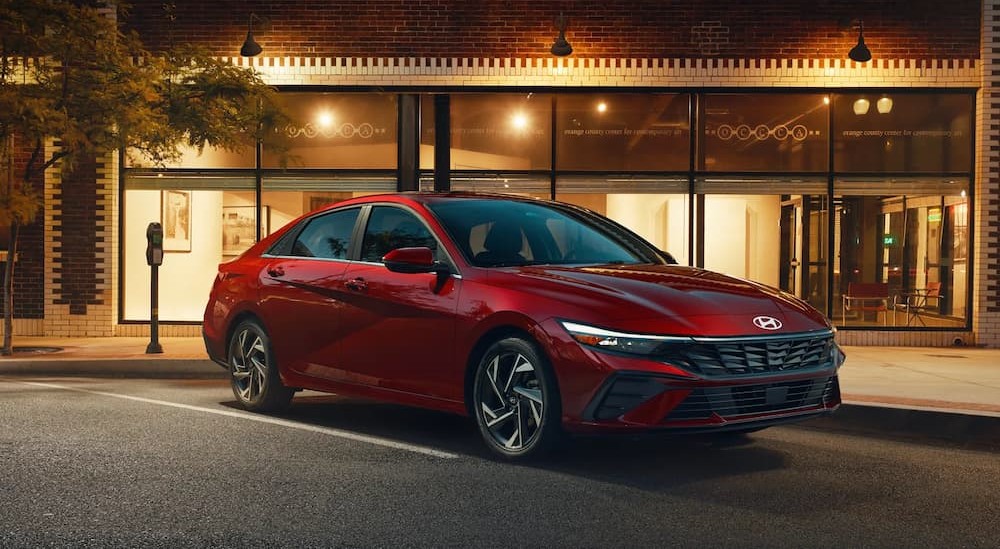
The Hyundai Elantra is here to carry the compact car torch. The sedan’s low starting price, modern design, and high performance potential make the Elantra one of the segment’s clear standouts, but in order to be the best, you have to beat the best. With more than five decades of success under its serpentine belt, the Honda Civic has become one of the models against which all compact cars are measured.
However, the Elantra is giving the segment’s heavy-hitters a run for their money with nearly 150,000 sales in 2025 alone. It’s not difficult to see why so many drivers have started seeking out a Hyundai Elantra for sale near Libertyville when it comes time to purchase their next compact ride.
With a well-appointed interior, an optional hybrid powertrain, and two turbocharged engines that include a 276 hp mill found under the hood of the performance-focused Elantra N, Hyundai’s compact champion is here to teach the Honda Civic a thing or two. Join us as we explore how each model has improved for 2026, compare important performance stats, and learn how the Hyundai Elantra has grown into one of the industry’s most compelling models.
New Trim, Exclusive Performance Model for 2026
The Elantra returns to the lineup largely unchanged for 2026, but there are a few updates that are worth mentioning.
Elantra SEL Sport Premium
First off, Hyundai has introduced a new SEL Sport Premium trim to replace the SEL Convenience. The SEL Sport Premium might just represent the best value of the bunch with a well-rounded design that fuses dynamic performance with premium comfort, convenience, and infotainment technology—though the standalone Elantra N is the obvious choice if you’re looking to really up the fun factor.
The new SEL Sport Premium trim sets itself apart from the rest of the 2026 roster with 17-inch machine-finished alloy wheels, an advanced adaptive cruise control system, heated front seats, and heated side mirrors that could make all the difference when brisk winter weather hits Libertyville. A 60/40 split-folding rear seat allows drivers to take advantage of the Elantra’s impressive cargo capacity while still accommodating backseat riders, and a power tilt-and-slide sunroof goes a long way towards creating a bright, modern interior.
Buyers will enjoy some advanced driver-assistance systems (ADAS) when selecting the SEL Sport Premium, including a forward collision-avoidance assist feature that’s calibrated to detect pedestrians, cyclists, and other vehicles in densely packed intersections.
Elantra N TCR
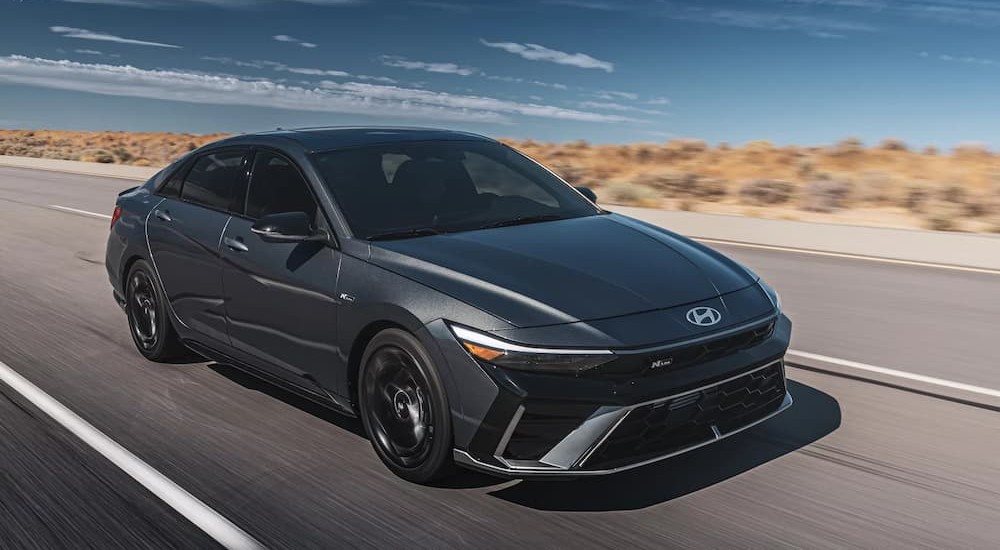
The performance-minded Elantra N—which became one of the market’s most exciting models back on its 2022 debut—also received a substantial upgrade for 2026, with Hyundai treating the speedy sedan to a new TCR Edition. The Elantra N has been providing drivers with a new way to enjoy life behind the wheel ever since it joined the lineup, but the new TCR Edition takes everything there is to love about the sport compact and kicks it up a notch.
Designed with closed track racing in mind, the Elantra N TCR Edition includes all of the high-performance goodies you’ll need for a full day of rubber-burning, engine-revving fun, from enhanced brakes with four-piston monoblock calipers and an adjustable rear wing to forged wheels and premium interior touches like Alcantara leather upholstery and blue seatbelts.
No Changes for the Civic
The Civic is taking a more lackadaisical approach to 2026 with no changes on the docket for the new model year. One might be inclined to give Honda a pass following a 2025 refresh that included new styling upgrades and the introduction of the Civic Hybrid, but it does make it a little difficult to get excited about the most recent model. The 2025 refresh included a new bumper and headlamps, but the Civic arguably lost more than it gained, with both the turbocharged 1.5L engine and manual transmission leaving the lineup.
The sporty Civic Si added some additional comfort and convenience tech in 2025, like a standard 10.2-inch digital gauge cluster, heated front seats, and Google-powered infotainment tech. It has also seen some modest improvements to its performance profile. A stiffer structure and retuned suspension help to create a more responsive driving experience, while sticky summer tires provide the traction you need to grip the road through the turns.
The Elantra Delivers Promising Performance
Few of today’s compact offerings provide the same customization potential as the 2026 Hyundai Elantra. While other brands tend to equip their smaller models with one or two available engines, the Elantra separates itself from the rest of the pack with four options on the table. This approach allows Libertyville drivers to dial in their preferred balance of performance and efficiency, and makes the 2026 Elantra one of the most versatile options on today’s market.
Base Engine Options
It all starts with a 2.0L I-4 base engine that’s rated to produce 147 hp. The entry-level motor isn’t going to win any NASCAR races with a zero-to-60-mph time of 8.1 seconds, but it is the most efficient of the non-hybrid models and easily outshines the base Civic’s 8.9-second record. A continuously variable transmission (CVT) allows the naturally aspirated engine to achieve 31 MPG in the city and 40 MPG on the highway for a rating of 35 MPG combined.
The entry-level 2026 Honda Civic is designed with a remarkably similar 2.0L I-4 engine, but that doesn’t mean the two motors offer matching performance. The Civic’s entry-level engine offers 150 hp and, like the Elantra, is matched with a CVT. While it might provide a slight edge in power, the Honda is slower, and the fuel economy depends on which variant you choose. The Civic sedan slightly bests the Elantra at 36 MPG combined, but the hatchback trails the Hyundai at 34 MPG combined.
Performance and Hybrid Options
The Elantra also offers an additional gas-powered option that’s reserved for the N-Line trim. While it can’t reach the high-speed heights of the Elantra N, the N-Line does improve on the base model with a 1.6L turbocharged I-4 that produces 201 hp and 195 lb-ft of torque. A seven-speed dual-clutch transmission (DCT) allows drivers to enjoy the best of both the automatic and manual approaches with a set of steering-wheel-mounted paddle shifters that can be used to pick the perfect gear. The results speak for themselves: the turbocharged engine allows the Elantra N-Line to hit 60 mph in just 6.5 seconds.
The standard Civic lacks a turbocharged option these days, though the standalone Civic Si does pack a 1.5L, 200 hp mill, which we’ll discuss in just a moment. If you want to enjoy a speedier version of the Civic, you can either invest in the Si or step up to the hybrid model. Introduced in 2022, the Civic Hybrid pairs a 2.0L I-4 with two electric motors to deliver 200 hp. It’s not a bad showing, though the compact’s 49 MPG combined is a bit underwhelming for an electrically assisted model.
This is especially noticeable when you compare the Civic against Hyundai’s own compact hybrid, which achieves 54 MPG combined with its 1.6L I-4 and electric motors. That’s more in line with what drivers have come to expect from a modern hybrid vehicle. The Elantra also provides a more satisfying experience and a stronger vehicle/driver connection, thanks to Hyundai ditching the CVT for a six-speed dual-clutch automatic. The transmission not only offers more control, but it also reduces the obnoxious droning sound that plagues too many hybrid models.
High-Performance Face-Off: Elantra N vs Civic Si
Compact cars have long traded on their sporty potential, and the 2026 Elantra and Civic are no exception. While the standard models deliver plenty of excitement wrapped up in an eye-catching package, Hyundai and Honda also offer true performance options in the Elantra N and Civic Si. The two sport compacts both follow a similar formula that sees the existing Elantra and Civic sedans imbued with exclusive styling touches, more potent engines, and all the high-performance components drivers need to take advantage of each car’s considerable power. But which one comes out on top?
The Elantra N Races Ahead
If you’re talking in terms of pure power, the Elantra N is pretty tough to beat. The standalone model is equipped with a 2.0L turbocharged engine for a grand total of 276 hp. If you want a little extra oomph as you cruise around Libertyville, simply press the Elantra N’s steering wheel-mounted N Grin Shift (NGS) button, and you’ll be treated to a temporary power boost that sees the sedan make 286 hp. The NGS feature is limited to the eight-speed dual-clutch automatic, but those opting for the six-speed manual won’t miss out on the fun, as that model includes an exclusive automatic rev-matching system.
Aside from NGS, there’s another good reason to choose the DCT when it comes to the 2026 Elantra N: speed. While the manual version is no slouch, with the ability to sprint from zero to 60 mph in 5.4 seconds, the automatic can hit the same speed in just 4.8 seconds. That’s not just quicker than the similarly priced Civic Si; it even tops Honda’s ultra-high-performance (and ultra-expensive) Civic Type R variant.
The Civic Si Falls Short
The Civic Si might represent an improvement on the base model, but the sporty sedan lags behind Hyundai’s compact contender in a few important areas. We’ll start under the hood, where drivers will find a 2.0L turbocharged I-4 that’s remarkably similar to the Elantra’s own engine. But while its engine might share the same dimensions and turbocharged design, the Civic Si can’t compete on power, with a maximum output of 200 hp. This makes the Civic Si a tough sell compared to the Elantra N, but it’s the way that power is routed through the car that really marks the biggest drawback.
Honda has decided to only pair the Civic Si with a six-speed manual. This limits the model’s accessibility for those who never learned how to row their own gears, and while a rev-matching feature does help to flatten the learning curve, it’s an odd decision in an age where only 18% of U.S. drivers know their way around a stick shift. The Civic’s speed is also cause for concern, and not just when compared to the Elantra N. With a zero-to-60-mph time of 6.6 seconds, the Si is actually slower than the Civic hybrid!
Enjoy the Compact Connection at Gurnee Hyundai
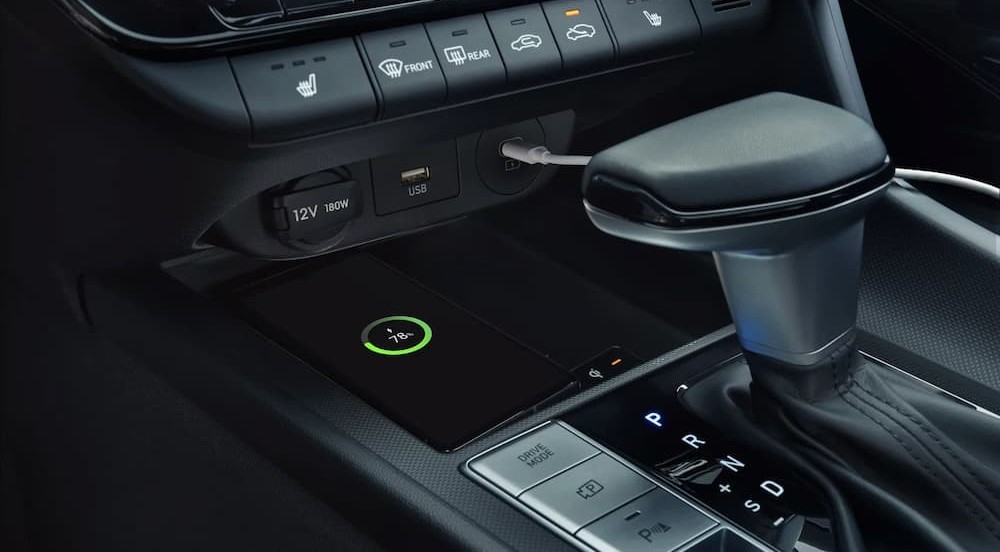
While we’ve touched on some of the Elantra’s clear advantages over the Honda Civic, there are plenty of other fun surprises in store when you visit us here at our dealership. This is especially true when it comes to the Elantra’s interior, which, unlike the Civic, boasts a long list of standard infotainment, convenience, and safety tech.
The most obvious improvement can be found on the dashboard, where every Hyundai driver will enjoy a standard eight-inch infotainment touchscreen compared to the seven-inch display found on the Civic. Investing in one of the Elantra’s upper trims sees the standard screen replaced with a 10.25-inch version that’s paired with a 10.25-inch digital gauge cluster to give the cockpit a cutting-edge feel.
Advanced safety features also come standard on Hyundai’s compact, while Honda treats critical tech like blind-spot monitoring and rear cross-traffic alert as optional add-ons limited to the higher trims of the Civic. Finally, and most convincingly, there’s Hyundai’s industry-leading warranty coverage.
The warranty is easily one of the most generous on today’s market, allowing drivers to hit the road with a new sense of confidence that’s backed by 10 years/100,000 miles of powertrain coverage and a five-year/60,000-mile limited warranty. Throw in the Elantra’s low starting price, and there’s just one question that remains: how quickly can you get down to Gurnee Hyundai?
Connect with us


- June 2026
- May 2026
- April 2026
- March 2026
- February 2026
- January 2026
- December 2025
- November 2025
- October 2025
- August 2025
- July 2025
- June 2025
- May 2025
- April 2025
- March 2025
- February 2025
- November 2024
- May 2024
- April 2024
- March 2024
- February 2024
- January 2024
- December 2023
- November 2023
- October 2023
- June 2023
- February 2023
- January 2023
- December 2022
- November 2022
- October 2022
- September 2022
- August 2022
- July 2022
- June 2022
- May 2022
- April 2022
- February 2022
Archives
- Electric Vehicles for Sale
- Hyundai Dealer Near Kenosha
- Hyundai Dealer Near Libertyville
- Hyundai Dealer Near Mundelein
- Hyundai Dealer Near Pleasant Prairie
- Hyundai Elantra for Sale Near Libertyville
- Hyundai Elantra for Sale Near Waukegan
- Hyundai IONIQ 5 for Sale
- Hyundai Kona for Sale Near Grayslake
- Hyundai Palisade for Sale Near Libertyville
- Hyundai Santa Fe For Sale Near Round Lake Beach
- Hyundai Tucson for Sale
- Hyundai Tucson for Sale Near Elgin
- Hyundai Tucson for Sale Near Libertyville
- Uncategorized
- Used Cars for Sale
Categories
Gurnee Hyundai
Address
6251 Grand Ave.
Gurnee, IL 60031
Phone
- Sales 847-693-7089
- Service 224-637-1674
- Parts 224-637-1691
| Monday | 9:00AM - 8:00PM |
| Tuesday | 9:00AM - 8:00PM |
| Wednesday | 9:00AM - 8:00PM |
| Thursday | 9:00AM - 8:00PM |
| Friday | 9:00AM - 8:00PM |
| Saturday | 9:00AM - 6:00PM |
| Sunday | Closed |
| Monday | 7:00AM - 7:00PM |
| Tuesday | 7:00AM - 7:00PM |
| Wednesday | 7:00AM - 7:00PM |
| Thursday | 7:00AM - 7:00PM |
| Friday | 7:00AM - 7:00PM |
| Saturday | 8:00AM - 5:00PM |
| Sunday | Closed |
| Monday | 7:00AM - 6:00PM |
| Tuesday | 7:00AM - 6:00PM |
| Wednesday | 7:00AM - 6:00PM |
| Thursday | 7:00AM - 6:00PM |
| Friday | 7:00AM - 5:00PM |
| Saturday | 8:00AM - 5:00PM |
| Sunday | Closed |
