


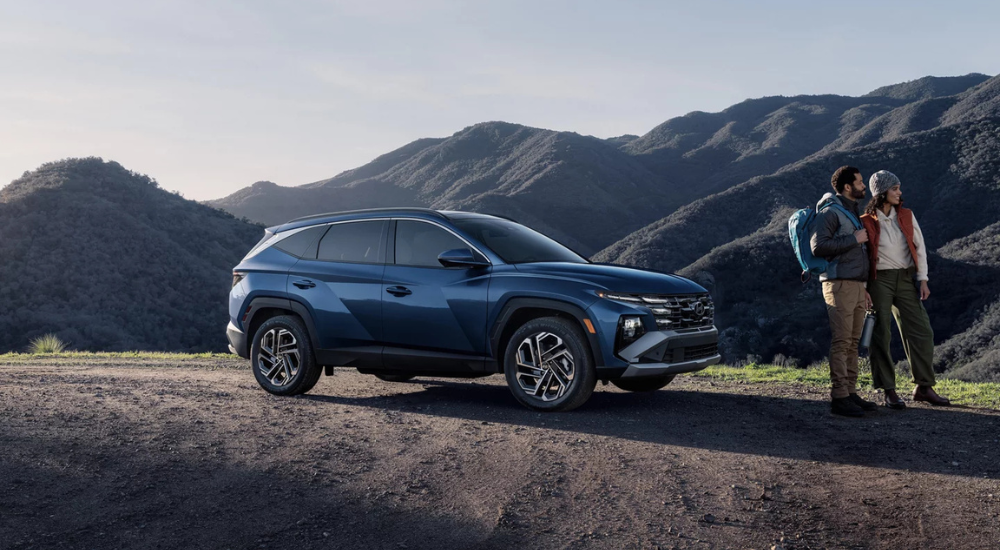
Families, commuters, and adventure-seekers shopping for a compact SUV often discover that two nameplates dominate the conversation: the 2026 Hyundai Tucson and the 2026 Mazda CX-50. With so many drivers turning their attention to the Hyundai Tucson for sale near Libertyville, it’s clear that this stunning SUV continues to set benchmarks for value, innovation, performance, and reliability.
While the 2026 CX-50 maintains Mazda’s reputation for sporty handling and stylish design, it falls short in areas that matter most. How so? As your trusted Hyundai dealer, join us as we compare the models and showcase how the 2026 Tucson outshines its Mazda rival in terms of price, performance, design, technology, and long-term peace of mind.
#1 – Pricing and Value: Getting More for Less
Libertyville drivers looking to get more for their money will find that it’s finally possible in the compact SUV segment. Price is a deciding factor for many, but value, or what you get for your hard-earned money, is also crucial. Fortunately, this is an area where Hyundai consistently shines, and the 2026 Tucson is no exception.
Setting the Baseline: Comparing Base Trims and Features
The 2026 Tucson and 2026 CX-50 are priced competitively, with MSRPs that align with the segment. The 2026 Tucson starts at $29,200, and the 2026 CX-50 starts at $29,900.[a] However, a closer look reveals a stark difference in what you actually get for the money.
Hyundai equips the Tucson SE with an impressive list of standard features, whereas Mazda takes a different approach, requiring drivers to spend more for a better-equipped trim or upgrades. The 2026 CX-50 2.5 S Select sets a modest baseline, rolling off Mazda’s production line with 17-inch aluminum wheels and a 10.25-inch Mazda Connect infotainment touchscreen featuring wireless Apple CarPlay and Android Auto.
The 2026 Tucson SE presents a significantly improved picture, enticing drivers away from Mazda and the brand’s efforts to limit features to add-ons and top-tier trims. Defying every expectation of a base model, the 2026 Tucson SE rolls off Hyundai’s production line with an extensive digital landscape featuring a 12.3-inch touchscreen display with wireless Apple CarPlay and Android Auto. That translates to a bigger digital display at a lower price, with the added benefit of enjoying advanced features like Smart Cruise Control with Stop & Go.
The Verdict
Hyundai has built its reputation on delivering long-term value, a facet that’s reflected not only in pricing but also in ownership costs, fuel savings, and warranty coverage (more on that later). When you factor in the Tucson’s available hybrid and plug-in hybrid powertrains, as well as a progressive lineup of innovative technologies, modern conveniences, and premium materials, there’s no question that the 2026 Tucson offers more standard and long-term value than the 2026 CX-50.
#2 – Performance: Dynamic Handling for Every Situation
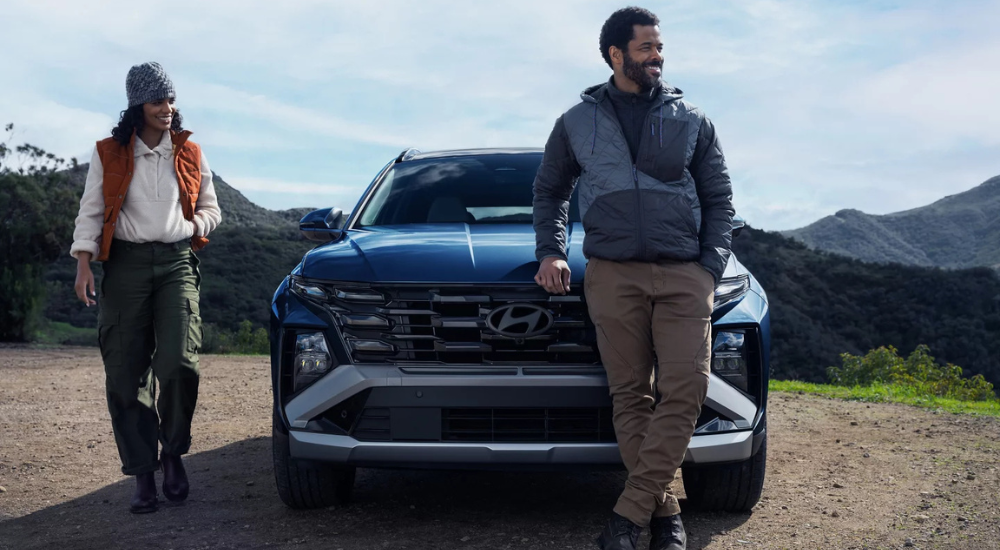
Mazda prides itself on its sporty and engaging performance, and the 2026 CX-50 is no exception. However, powertrain versatility is where the 2026 Tucson pulls ahead. How? Mazda misses an entire demographic that Hyundai happily obliges and, admittedly, celebrates.
The Triple Powertrain Advantage
The 2026 CX-50 offers a three-engine lineup that includes two four-cylinder engines and a hybrid powertrain. The standard 2.5L SKYACTIV-G inline-four, paired with a six-speed automatic transmission, produces 187 hp and delivers an EPA-estimated 26 MPG combined.
Hyundai matches that output with the 2026 Tucson’s 2.5L inline-four, which produces 178 lb-ft of torque and is paired with a smooth-shifting eight-speed automatic transmission. Its all-wheel drive fuel economy matches the CX-50’s, but the front-wheel drive model pulls ahead at an EPA-estimated 28 MPG combined.
Turbocharging the CX-50’s 2.5L inline-four engine increases its output to 256 hp and improves its fuel efficiency to its lowest level, with an EPA-estimated 25 MPG combined. It also leaves drivers with only one more option–a 2.5L inline-four hybrid powertrain that works with an electronic continuously variable transmission to produce 219 hp.
The 2026 Tucson’s advantage shines with its hybrid and plug-in hybrid options. Hyundai’s 1.5L turbocharged inline-four hybrid powertrain produces 231 hp and 271 lb-ft of near-instant torque, resulting in the SUV’s best fuel economy, with an EPA-estimated 38 MPG combined, thanks to the all-wheel drivetrain. Hyundai ups the ante with the Tucson PHEV, which adds a 13.8 kWh battery, boosting output to 268 hp for an estimated 77 MPGe and a 32-mile all-electric range.
The Verdict
Mazda overlooks the growing demand for more efficient SUVs, leaving Libertyville drivers with only two options: a traditional gas engine or a hybrid powertrain. Moreover, Mazda’s six-speed transmission falls short of Hyundai’s eight-speed automatic, and its eCVT adds another disadvantage, since CVTs are notoriously finicky and more expensive to repair.
The 2026 Tucson answers three distinct needs, gaining a triple powertrain advantage that produces more hp for your money. Its automatic transmissions offer long-term reliability, adding another win for the popular SUV.
#3 – Interior Comfort & Tech: Versatile and Innovative
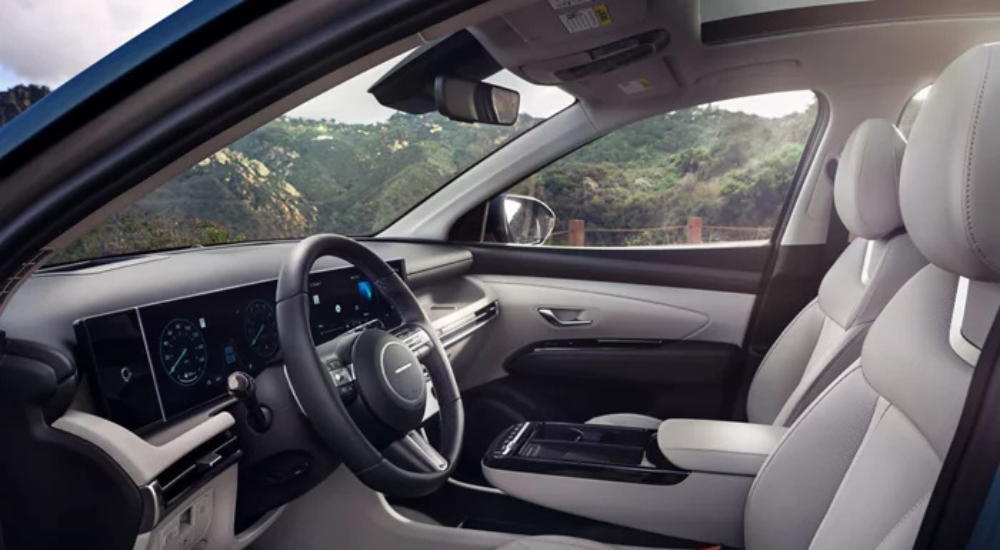
When it comes to daily driving and long trips, your experience in the cabin is just as important as performance. While the 2026 CX-50 is sporty and stylish, the 2026 Tucson offers a larger, more versatile cabin packed with modern technology at a value that can’t be ignored.
Passenger and Cargo-Friendly
The 2026 CX-50 is sleek and sophisticated, but its aesthetic severely limits the cabin’s flexibility. How so? The CX-50’s interior is driver-focused, with Mazda treating the rear seat like an afterthought, resulting in cramped quarters for passengers of any size. This limitation also translates to the amount of cargo you can carry, with the CX-50’s cargo volume measuring 31.4 cu. ft. behind the second row and 56.3 cu. ft. total.
Alternatively, the 2026 Tucson is far more versatile, comfortably accommodating passengers and cargo. Its spacious two-row layout provides ample leg, head, and shoulder room, ensuring everyone’s comfort wherever the road leads. This larger interior is thanks to Hyundai’s boxier design, which works to your advantage when hauling cargo.
The 2026 Tucson is expertly engineered to handle all of life’s demands, and its total cargo volume of 80.3 cu.ft proves as much. With 41.2 cu.ft behind the second row, Libertyville drivers can easily haul groceries, backpacks, luggage, sports equipment, and other gear. Moreover, opting for the Tucson Hybrid or PHEV doesn’t significantly reduce space, with 80 cu.ft in the Hybrid and 71.8 cu.ft in the PHEV.
Confidence-Inspiring Tech for Everyday Life
Along with the 2026 Tucson’s more spacious cabin, it features a larger digital landscape with a more intuitive infotainment system. The 2026 CX-50 features a 10.25-inch infotainment touchscreen. Still, Hyundai takes it a step further with the 2026 Tucson’s 12.3-inch display, which includes wireless Apple CarPlay and Android Auto, pairing perfectly with the 12.3-inch digital instrument cluster.
The Verdict
The 2026 CX-50 is sophisticated, but that styling requires compromising your cabin experience, especially when it comes to hauling passengers and cargo. The 2026 Tucson leads the race in interior space and technology, giving drivers a spacious, functional, and tech-forward cabin that enhances every moment on the road.
And the Winner Is
The 2026 Tucson’s victory over the 2026 CX-50 is apparent, but there’s one more leg of the race to consider–warranty coverage. As we’ve seen from comparing pricing, value, performance, and interior details, Mazda capitalizes on the CX-50’s sporty and sophisticated demeanor by encouraging drivers to spend more on upgrades and top-tier trims. Even then, Mazda doesn’t offer Libertyville drivers confidence in their investment, with a modest and less-than-impressive warranty.
Hyundai celebrates your future behind the wheel of the 2026 Tucson with the industry’s leading warranty coverage. Not only do you get a better-equipped SUV that’s sporty, fun to drive, and incredibly versatile, but you’re also backed by a 10-year or 100,000-mile powertrain limited warranty, providing peace of mind every mile ahead. It’s the confidence you deserve when you climb behind the wheel.
[a]MSRP excluding tax, license, registration, destination charge, and accessories. MSRP may change without notice. See dealer for complete details.
Connect with us


- June 2026
- May 2026
- April 2026
- March 2026
- February 2026
- January 2026
- December 2025
- November 2025
- October 2025
- August 2025
- July 2025
- June 2025
- May 2025
- April 2025
- March 2025
- February 2025
- November 2024
- May 2024
- April 2024
- March 2024
- February 2024
- January 2024
- December 2023
- November 2023
- October 2023
- June 2023
- February 2023
- January 2023
- December 2022
- November 2022
- October 2022
- September 2022
- August 2022
- July 2022
- June 2022
- May 2022
- April 2022
- February 2022
Archives
- Electric Vehicles for Sale
- Hyundai Dealer Near Kenosha
- Hyundai Dealer Near Libertyville
- Hyundai Dealer Near Mundelein
- Hyundai Dealer Near Pleasant Prairie
- Hyundai Elantra for Sale Near Libertyville
- Hyundai Elantra for Sale Near Waukegan
- Hyundai IONIQ 5 for Sale
- Hyundai Kona for Sale Near Grayslake
- Hyundai Palisade for Sale Near Libertyville
- Hyundai Santa Fe For Sale Near Round Lake Beach
- Hyundai Tucson for Sale
- Hyundai Tucson for Sale Near Elgin
- Hyundai Tucson for Sale Near Libertyville
- Uncategorized
- Used Cars for Sale
Categories
Gurnee Hyundai

Address
6251 Grand Ave.
Gurnee, IL 60031
Phone
- Sales 847-693-7089
- Service 224-637-1674
- Parts 224-637-1691
| Monday | 9:00AM - 8:00PM |
| Tuesday | 9:00AM - 8:00PM |
| Wednesday | 9:00AM - 8:00PM |
| Thursday | 9:00AM - 8:00PM |
| Friday | 9:00AM - 8:00PM |
| Saturday | 9:00AM - 6:00PM |
| Sunday | Closed |
| Monday | 7:00AM - 7:00PM |
| Tuesday | 7:00AM - 7:00PM |
| Wednesday | 7:00AM - 7:00PM |
| Thursday | 7:00AM - 7:00PM |
| Friday | 7:00AM - 7:00PM |
| Saturday | 8:00AM - 5:00PM |
| Sunday | Closed |
| Monday | 7:00AM - 6:00PM |
| Tuesday | 7:00AM - 6:00PM |
| Wednesday | 7:00AM - 6:00PM |
| Thursday | 7:00AM - 6:00PM |
| Friday | 7:00AM - 5:00PM |
| Saturday | 8:00AM - 5:00PM |
| Sunday | Closed |
